The Bible’s Dark Ages

Parchment and whether Jesus is divineWe’re taking a trip through time, from our English New Testament, back through the translations and various copies (Part 1), back through the textual variants to our best guess at the original Greek manuscripts (Part 2).  We’ve arrived at our best reconstruction of the canon determined by the Council of Nicaea (325 CE).

The novel The Da Vinci Code portrayed the Council as the stereotypical politicians’ smoky back room where the features of Christianity and the books that represented it (the canon) were haggled over.  Many Christian sources have argued against this characterization, saying that the canon had largely been decided by the early churches by that point, but this doesn’t avoid the problem.  Selecting the canon would’ve been a popularity contest either way.  If the bishops at Nicaea didn’t vote it into existence, then the weeding-out process in the early church created a de facto canon that the bishops accepted with minimal change.  Either way grounds the canon on the imperfect shoulders of ordinary people.

Let’s take the next step.  We have a big gulf to cross from 325 CE to roughly 70–90 CE, when the originals were written down.

Suppose that Mark was written in Rome in the year 70.  Copies are made and it gradually makes its way to Alexandria, where it is copied over and over until it finds its way into the Codex Sinaiticus in about 350.  What happened to it in those 280 years?  How does the version that we have vary from the original manuscript, now lost to history?  That’s a lot of time for hanky-panky.

The issue isn’t that I’m certain that the books were changed significantly; rather, we aren’t certain that they weren’t.  This period from Nicaea back to the originals is the Bible’s Dark Ages, a period with very little documentation.  We have just a few dozen Greek manuscripts that precede the complete codices.  The papyrus manuscripts are all fragments, containing at most a chapter or two of one book.  These manuscripts are remarkable finds, but that does nothing to change the fact that we’re bridging a large gap with little information.  We can’t say that our copies differ little from the originals because we don’t have the originals.

This biblical Dark Ages was a period of much turmoil in the Christian community.  The divisions in early Christianity were much bigger than the modern Lutheranism vs. Presbyterianism distinction, say.  Instead of French vs. Spanish, think French vs. pre-Columbian Mayan.  And these divisions were all fighting for survival, fighting for their place in the canon.

Historians know of four primary divisions in the early Christian church.

Proto-Orthodox.  This is Bart Ehrman’s term for the early Christian sect that would become Christianity as we know it today.  Paul’s writings (which changed Jewish law to reject circumcision, the kosher laws, and so on) form the heart of this division.

Ebionites.  These may have been the first Christians, because they saw Jesus as a Jew.  This was the Jesus who said, “Do not think that I have come to abolish the Law or the Prophets” (Matt. 5:17).  The New Testament documents the struggles between the James/Peter sect and Paul in Galatians 2:11–21.  Bart Ehrman’s Misquoting Jesus says,

According to the Ebionites, then, Jesus did not preexist; he was not born of a virgin; he was not himself divine.  He was a special, righteous man, whom God had chosen and placed in a special relationship to himself.1

Marcionites.  This Christian variant was put forward by Marcion in about 144 CE.  The Marcionites had no use for the Old Testament, since it documented the Jews’ god, who was different from the (unnamed) father of Jesus.  Marcion argued that you could answer to Yahweh if you wanted, but Jesus offered a much better option.  This Jesus was divine and only appeared to be human.  Consider John 20:26: “Though the doors were locked, Jesus came and stood among them.”  Marcion considered only Paul’s writings to be canonical.

Gnostics.  The Gnostics rationalized the evil in the world by saying that the world was created by a demiurge (craftsman) who didn’t intend to or wasn’t able to create a perfect world.  While most people on the earth were just animals, some held a divine spark.  For that special few, Jesus’s hidden knowledge would be necessary after death to see them safely back to heaven.  We see this in Luke 8:10: “The knowledge of the secrets of the kingdom of God has been given to you, but to others I speak in parables, so that, ‘though seeing, they may not see; though hearing, they may not understand.’”

Biblical redaction is the deliberate change or concatenation by a later editor, and the Bible is full of examples.  For example, the Old Testament has two creation stories, two flood stories, two contradictory Ten Commandments (Exodus 20 vs. 34), and even two David and Goliath stories.

The New Testament holds clues to this kind of change as well.  For example, John ends with chapter 20 and then again with chapter 21.2  The authorship of Peter’s two epistles is unclear.  Jesus says, “But about that day or hour [of the end] no one knows, not even the angels in heaven, nor the Son, but only the Father” (Matt. 24:36), but some scribes omitted the startling phrase “nor the Son” from their copies.

The Ebionite, Marcionite, and Gnostic passages above suggest that our Bible is a conglomeration of different traditions, with verses or chapters added as necessary to dull the edge of an unwanted concept.

This isn’t meant to be a thorough discussion of New Testament redaction.  Rather, I want to show just a few places where it is suspected and to suggest that it could have been even more widespread.  Claims as remarkable as those of the gospels must be built on more than “Well, they might not have been changed.”

The message of James differs from the message of Paul; the message of Paul differs from the message of Acts; the message of the Revelation of John differs from the message of the Gospel of John; and so forth.  Each of these authors was human, each of them had a different message, each of them was putting the tradition he inherited into his own words.3

Would writings be deliberately changed?  The author of Revelation apparently knew it was widespread enough to end with a curse against anyone who would modify his book.  The famous Testimonium Flavianum in Josephus (“Now there was about this time Jesus, a wise man, if it be lawful to call him a man …”) is almost universally said to have been added by later copyists.  With the pull of competing Christianities, the urge to “improve” a book might have been irresistible.

Would competing writings be destroyed?  It happened in Islam.  The “Uthmanic recension” was the process through which one version of the Koran was accepted and all competing versions destroyed.  The Nag Hammadi library seems to have been buried.  Why hide these books unless there was reason to fear destruction?  Perhaps, like the Koran, the Bible has been modified through destruction.

While historians have told us a remarkable amount about the societies from which Christianity arose, our understanding is changing even in our time.  For example, consider “Gabriel’s Revelation,” a recently discovered first century BCE writing that talks about a suffering messiah, not Jesus but Simon of Peraea.  “In three days you will know that evil will be defeated by justice.”  Do we conclude from this that resurrection after three days wasn’t a new concept to the Jesus-era Jews?  In this revelation, the messiah sheds blood, not for the benefit of sinners but for the redemption of Israel.

Of course we don’t discard the clues we have about the original New Testament documents, but let’s proceed with humility about how little we can say with confidence.

Read the first post in the series here: What Did the Original Books of the Bible Say?

Next time: the last post in the series will take the step from gospel originals to the figure of Jesus.

1 Bart Ehrman, Misquoting Jesus (HarperOne, 2005), p. 156.
2 Ehrman, 61.
3 Ehrman, 215.

Photo credit: Walter Noel

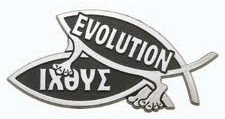
Word of the Day: Survival of the Fittest

What Would Jesus Say?The term “survival of the fittest” did not initially come from Charles Darwin’s Origin of Species, though later editions did use it.  It was first coined by Herbert Spencer, after reading Origin.
While a convenient phrase, it can be confusing.  “Fit” in biological terms doesn’t mean what we commonly think (strong, quick, or agile, for example) but refers to how well adapted an organism is for an environment.  Think of it as puzzle-piece fit, not athlete fit.

Creationists sometimes use the phrase to mean that might makes right or that the most savage or ruthless or selfish will survive.  On the contrary, rather than might makes right, cooperation can be the better approach.  And even if evolution did have some bloodthirsty aspects to it, how does that change whether it’s an accurate theory or not?

NewScientist magazine says:

Although the phrase conjures up an image of a violent struggle for survival, in reality the word “fittest” seldom means the strongest or the most aggressive. On the contrary, it can mean anything from the best camouflaged or the most fecund to the cleverest or the most cooperative. Forget Rambo, think Einstein or Gandhi.

What we see in the wild is not every animal for itself. Cooperation is an incredibly successful survival strategy. Indeed it has been the basis of all the most dramatic steps in the history of life. Complex cells evolved from cooperating simple cells. Multicellular organisms are made up of cooperating complex cells. Superorganisms such as bee or ant colonies consist of cooperating individuals.

Note also that evolution is descriptive, not prescriptive; it simply says what is the case and doesn’t provide moral advice.  “I’ll model my morality on evolution” makes as much sense as “I’ll model my morality on the fact that arsenic kills people.”

Creationists sometimes twist Darwin’s The Descent of Man to argue that he favored eugenics.  Darwin’s damning paragraph said, in part, “hardly anyone is so ignorant as to allow his worst animals to breed.”  In the first place, whether Darwin ate babies plain or with barbeque sauce says nothing about whether evolution is accurate or not.  In the second place, the very next paragraph clarifies Darwin’s position about denying aid to the helpless.

Nor could we check our sympathy, even at the urging of hard reason, without deterioration in the noblest part of our nature.

“Survival of the fittest” is a handy description of natural selection as long as all parties understand what it means.

Photo credit: EvolveFish

Related links:

  • “Survival of the fittest,” Wikipedia.
  • Michael Le Page, “Evolution myths: ‘Survival of the fittest’ justifies ‘everyone for themselves,’” NewScientist, 4/16/08.

What Did the Original Books of the Bible Say? (Part 2)

Does God exist?Part 1 of our journey from today’s New Testament back in time to Jesus looked at the problems of translations, canonicity, and finding the best copies.  The next problem to crossing this gulf is textual variants.  There are 400,000 differences between the thousands of New Testament copies—more differences than there are words in the New Testament.  Almost all are insignificant, but thousands of meaningful differences remain.

Historians use several tools to resolve these differences:

  • Criterion of Embarrassment.  Of two passages, which one is more embarrassing?  We can easily imagine scribes toning down a passage, but it doesn’t make sense for them to make it more embarrassing.  The passage that is more embarrassing is likelier to be more authentic.  For example, different copies of Mark 1:40–41 has Jesus either “moved with compassion” or “moved with anger” (for more, see the NET Bible comment on this phrase).  A copyist changing compassion to anger is hard to imagine, but the opposite is quite plausible.  The Criterion of Embarrassment would conclude that “moved with anger” is the likelier original reading.
  • Criterion of Multiple Attestation.  A claim made by multiple independent sources is preferred over one in a single source.

In addition, a contested passage in an older manuscript is preferred, the one contained in more manuscripts is preferred, and so on.

Notice that these tools need multiple manuscripts to work.  They ask: given two manuscripts with different versions of a particular passage, which is the more authentic one?

Consider the long ending of Mark, for example.  Given a manuscript of Mark ending with verse 16:20 (version A) and a manuscript ending with 16:8 (version B), the historians’ tools can be applied to determine which is the likely older and more authentic version.  But what if you don’t have multiple versions?  Suppose we only had Mark version A, with no copies of B and no references to it.  Scholars wouldn’t even know to ask the question!

Consider the three most famous of these embarrassing scribal additions: the long ending of Mark, the Comma Johanneum (the only explicit reference to the Trinity in the Bible), and the story of Jesus and the woman taken in adultery.  Apologists will argue that these are neither embarrassing nor problems because they’ve been resolved.  We know that they weren’t original.  But this is true only because historians happen to be lucky enough to have competing manuscripts without these additions.  For what added biblical passages do we not have correct manuscripts to make us aware of the problem?

There are consequences.  Pentecostal snake handlers trust in the long ending tacked onto Mark (“In my name they will drive out demons; they will speak in new languages; they will pick up snakes with their hands, and whatever poison they drink will not harm them”).  What additional nutty demands in our New Testament do we not know are inauthentic?

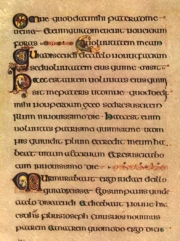
Of several manuscript categories, our oldest complete copies are Alexandrian manuscripts, including the Codex Sinaiticus and Codex Vaticanus mentioned in the last post.  That’s not because they’re necessarily better copies but because they were preserved better.  The dry conditions of Alexandria, Egypt preserved manuscripts better than many other places where New Testament documents were kept—Asia Minor, Greece, or Italy, for example.  We accept these manuscripts simply because anything that might refute them has crumbled to dust, which is not a particularly reliable foundation on which to build a portrait of the truth.

Read the first post in the series here: What Did the Original Books of the Bible Say?

Next time: The Bible’s Dark Ages

Photo credit: Wikipedia

Related posts:

What Did the Original Books of the Bible Say?

Is there really a God who created everything?Remember the 2011 film Anonymous that questioned the authorship of Shakespeare’s plays?  It argued that William Shakespeare was just a front man for the true author, Edward de Vere, the Earl of Oxford.  Modern historians have proposed several candidates besides Shakespeare himself, who some have argued was illiterate.

So we don’t know who was perhaps the most famous and influential author in the English language?  Shakespeare only died in 1616, we have a good understanding of the times, and he wrote in Early Modern English, and yet there remains a gulf of understanding that we can’t reliably cross.

And we flatter ourselves that we can cross the far more daunting gulf that separates us from the place and times of Jesus so we can accept the far more incredible claims of the gospel story.

Let’s see how reliable our modern New Testament is.  We’ll follow it back in time to track the tortuous journey on which it has come.  This post will go back to the Council of Nicaea in 325 CE, and later posts will explore the hurdles between that point and the life of Jesus.

Our first step is to get past the translations.  In English, we have dozens of versions—New International Version, American Standard Version, New American Standard Bible, and so on.  Some Christians prefer the more archaic King James Version even to the point of arguing that it alone is divinely inspired.  Proponents of different versions find plenty to argue about.

Translation is especially difficult with a dead language like New Testament Greek since text examples are limited and there are no living speakers to consult.  Consider an English example: the idiom “have your cake and eat it too” interpreted 2000 years in the future.  Or “saving face” or “kick the bucket” or “throw in the towel” or “get your comeuppance.”  If given only a handful of examples, future interpreters would have to guess at the meanings.

Let’s look at similar problems in the Bible.  Consider the Hebrew word reem, translated nine times in the King James Version as “unicorn.”  For example, “Rescue me from the mouth of the lions; save me from the horns of the reem.”  It’s now translated as “wild ox,” so perhaps we’ve got this one resolved.  But what other rarely used words and phrases have been misunderstood?  With no authority, we have nothing more than our best guesses to rely on.

A bigger question is: what is “the Bible”?  That is, what is canonical, the books accepted as scripture?  The Christian church is not unified on this question.  For example, Protestants accept the fewest books.  The Roman Catholics add two books of Maccabees and Tobit (and others), the Greek Orthodox church accepts those and adds the Prayer of Manasseh and Esdras (and others), and the Ethiopian Orthodox church accepts those and adds Enoch and Jubilees (and others).  In other words, Christian churches themselves can’t agree on what books contain the inspired word of God.

Our next challenge is to find the best original-language copies.  The King James version was based on the 16th-century Textus Receptus (“received text”), which was a printed version of the best Greek New Testament texts known at the time.  More Greek manuscripts have come to light since then, and modern scholars rely on a broader set, so let’s discard the Textus Receptus and focus on those instead.

Many apologists point proudly to the thousands of New Testament manuscript copies we have today—roughly 5000 Greek manuscripts and lectionaries (collections of scripture used during church services) and close to 20,000 manuscripts in other languages (mostly Latin, but also Ethiopic, Slavic, Syriac, and more).  This compares with just 600 copies of the Iliad, our second-most well-represented ancient book.

These are impressive numbers, but too much is made of them.  Many of these are incomplete fragments—especially the oldest and most important—and almost all are far removed from the early church period.  Suppose scholars discovered a library with 1000 previously unknown Latin Bible manuscripts from the 12th century.  This would be quite a find, but these late manuscripts wouldn’t override the content from the best and oldest handful.  Today’s 25,000 copies tell us little more about the originals than would having only the most reliable and complete 25 copies.

While there are fragments of gospels going back to the second century, for complete copies we go to manuscripts such as the Codex Sinaiticus and Codex Vaticanus.  These are our oldest copies of the New Testament, and each was written in roughly 350 CE, perhaps as part of the newly approved canon from the Council of Nicaea.

We’ve still got a long way to go before the events in the life of Jesus.  It’s like we’re looking the wrong way through a telescope.

See all posts in this series here:

We see through a glass, darkly
(That is: we dimly see in a mirror)
— 1 Corinthians 13:12 (KJV)

Photo credit: Wikipedia

Jesus: Just One More Dying and Rising Savior

It’s a week after Easter, so here is one final post on the theme of resurrection.

History records many dying-and-rising saviors.  Examples from the Ancient Near East that preceded the Jesus story include Tammuz, Osiris, Dionysus, Adonis, Attis, and Baal.  Here is a brief introduction.

Tammuz was the Sumerian god of food and vegetation and dates from c. 2000 BCE.  His death was celebrated every spring.  One version of the story has him living in the underworld for six months each year, alternating with his sister.

Osirus was killed by his brother Set and cut into many pieces and scattered.  His wife Isis gathered the pieces together, and he was reincarnated as the Egyptian god of the underworld and judge of the dead.  He was worshipped well before 2000 BCE.

Dionysus (known as Bacchus in Roman mythology) was the Greek god of wine and dates to the 1200s BCE.  The son of Zeus and a mortal woman, Dionysus was killed and then brought back to life.

Adonis (from 600 BCE) is a Greek god who was killed and then returned to life by Zeus.

Attis (from 1200 BCE) is a vegetation god from central Asia Minor, brought back to life by his lover Cybele.

In Canaanite religion, Baal (Baʿal) was part of a cycle of life and death.  Baal and Mot are sons of the supreme god El (yes, one of the names of the Jewish god).  When El favored the death god Mot over Baal, the heat of the summer took over and Baal died.  He was resurrected when his sister-wife kills Mot.

All these gods:

  • came from regions that were close enough to the crossroads of Israel (Mesopotamia, Egypt, Greece, and Asia Minor) for the ideas to have plausibly made it there,
  • were worshipped well before the time of Jesus, and
  • were of the dying-and-rising sort.

This is strong evidence that the gospel writers knew of (and could have been influenced by) resurrecting god stories from other cultures.

Is it possible that Judea at this time was a backwater, and the people were unaware of the ideas from the wider world?  That seems unlikely.  The book of 2 Maccabees, written in c. 124 BCE, laments at how Hellenized the country was becoming.  It says that the new high priest installed by Seleucid king Antiochus Epiphanes “at once shifted his countrymen over to the Greek way of life.”  He “introduced new customs contrary to the Law” and “induced the noblest of the young men to wear the Greek hat.”  The book complains about “an extreme of Hellenization and increase in the adoption of foreign ways” and the youth “putting the highest value upon Greek forms of prestige.”

In fact, the gospels themselves report that the idea of dying and rising again was a familiar concept.  Jesus in the early days of his ministry was thought to be a risen prophet.

King Herod heard of [the ministry of Jesus], for His name had become well known; and people were saying, “John the Baptist has risen from the dead, and that is why these miraculous powers are at work in Him.” But others were saying, “He is Elijah.” And others were saying, “He is a prophet, like one of the prophets of old.” But when Herod heard of it, he kept saying, “John, whom I beheaded, has risen!” (Mark 6:14–16)

One Christian website does a thorough job attacking poorly evidenced parallels between Jesus and these prior gods.  For example, was Dionysus really born to a virgin on December 25?  Did Mithras really have 12 disciples?  Was Krishna’s birth heralded by a star in the east?  The author offers $1000 to anyone who can prove that any of these gods’ lists of parallels are actually true.

I’ll agree that there are strained parallels.  One early work that has been criticized for too many claims and too little evidence is The World’s Sixteen Crucified Saviors by Kersey Graves (1875).  The recent “Origins of Christianity and the Quest for the Historical Jesus Christ” by Acharya S also seems to be reaching, in my opinion.

I don’t have the expertise to weigh in on these many issues, so let’s grant the complaints and dismiss the many unsupportable specific parallels.  What’s left is what really matters: that the Jesus story arose in a culture suffused with the idea of dying and rising saviors.

Apologists raise other objections.

Many of these gods actually came after Jesus.  That’s why the list above only includes dying-and-rising gods who are well-known to have preceded Jesus.  There are many more such gods—Mithras, Horus, Krishna, Persephone, and others—that don’t seem to fit as well.  In fact, Wikipedia lists life-death-rebirth deities from twenty religions worldwide, but I’ve tried to list above the six most relevant examples.

But Jesus really existed!  He’s a figure from history, unlike those other gods.  Strip away any supernatural claims from the story of Alexander the Great, and you’ve still got cities throughout Asia named Alexandria and coins with Alexander’s likeness.  Strip away any supernatural claims from the Caesar Augustus story, and you’re left with the Caesar Augustus from history.  But strip away the supernatural claims from the Jesus story, and you’re left with a fairly ordinary rabbi.  The Jesus story is nothing but the supernatural elements.

Most of those gods were used to explain the cycles of the seasons.  Jesus isn’t like them.  Christianity is different from all the other religions, just like any religion.  If Christianity weren’t different from one of the earlier religions, you’d call it by the name of that religion.

In another post I explore the Dionysus myth more fully to show the parallels with the Jesus story.  That post also notes how Justin Martyr (100–165 CE) not only admitted to the similarities but argued that the devil put them in history to fool us.

Okay, they’re all myths, but the Jesus story is true myth.  This was the approach of C.S. Lewis, who said, “The story of Christ is simply a true myth; a myth working on us in the same way as the others, but with this tremendous difference, that it really happened, and one must be content to accept it in the same way, remembering that it is God’s Myth where the others are men’s myths.”

So you admit that the Jesus story indeed has many characteristics of mythology but demand that I just trust you that it’s true?  Sorry, I need more evidence than that.

And the throw-in-the-towel argument:

Just because Christianity developed in a culture that knew of other resurrecting gods doesn’t mean that Jesus wasn’t the real thing.  Granted.  But “you haven’t proven the gospel story false” isn’t much of an argument.  Those who seek the truth know that proof is impossible and try instead to find where the evidence points.

And here’s where the evidence doesn’t point: that humans worldwide invent dying-and-rising saviors (except in the Jesus case, ’cause that one was real!).

Photo credit: Wikipedia

Related posts:

Related links:

The Moon Isn’t Made of Green Cheese … Is It?

A moon made of cheese is cut, and a wedge is pulled awayEaster has recently passed, and I’d like to rerun a post on the resurrection.

In a fable going back centuries within various cultures, a simpleton sees the reflection of the full moon in water and imagines that it’s a wheel of green (that is, young) cheese.  It’s a tale that we often pass on to our children and that we discard with time, like belief in the Easter Bunny.

But how do you know that the moon isn’t made of green cheese?

Physicist Sean M. Carroll addressed this question recently.  After a few moments exploring physical issues like the moon’s mass, volume, and density and the (dissimilar) density of cheese, he gave this frank broadside:

The answer is that it’s absurd to think the moon is made of green cheese.

He goes on to say that we understand how the planets were formed and how the solar system works.  There simply is no reason to suppose that the moon is made of green cheese and plenty of reasons to suppose that it’s not.

This is not a proof, there is no metaphysical proof, like you can prove a statement in logic or math that the moon is not made of green cheese.  But science nevertheless passes judgments on claims based on how well they fit in with the rest of our theoretical understanding.

Bringing this thinking into the domain of this blog, how do we know that Jesus wasn’t raised from the dead?  The answer is the same: it’s absurd to think that Jesus was raised from the dead.

  • We know how death works.  We see it in plants and animals, and we know that when they’re gone, they’re just gone.  Rats don’t have souls.  Zebras don’t go to heaven.  There’s no reason to suppose that it works any differently for our favorite animal, Homo sapiens, and plenty of reasons to suppose that it works the same.
  • We know about ancient manuscripts.  Lots of cultures wrote their ancient myths, and many of these are older than the books of the Old Testament: Gilgamesh (Sumerian), Enûma Eliš (Babylonian), Ramayana (Hindu), Iliad (Greek), Beowulf (Anglo-Saxon), Popol Vuh (Mayan), and so on.  For whatever reason, people write miracle stories, and we have a large and well-populated bin labeled “Mythology” in which to put stories like those in the Bible.
  • We know about how stories and legends grow with time.  We may have heard of Charles Darwin’s deathbed conversion to Christianity (false).  Or that a decent fraction of Americans thought that President Obama is a Muslim.  Or that aliens crash-landed in Roswell, New Mexico.  Or that a new star appeared in the night sky with the birth of North Korea’s Kim Jong Il.  In our own time, urban legends so neatly fit a standard pattern, that simple rules help identify them.
  • We know that humans invent religions.  There are 42,000 denominations of Christianity alone, for example, and uncountably many versions of the myriad religions invented through history.

Natural explanations are sufficient to explain Christianity.

Might the moon actually be made of cheese?  Science doesn’t make unconditional statements, but we can assume the contrary with about as much confidence as we have in any scientific statement.

Might Jesus have been raised from the dead?  Sure, it’s possible, but that’s not where the facts point.  Aside from satisfying a preconception, why imagine that this is the case?

Photo credit: TV Tropes

Related posts: