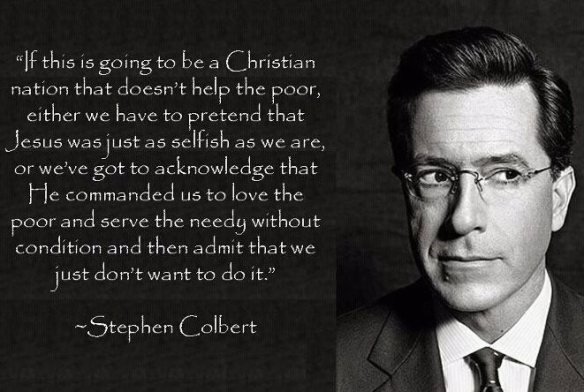
The Declaration of Independence—A Christian Document?

Does God exist?  Weak Christian apologetics don't make much of an argument.Is America a Christian nation?  Some Christians eagerly point to the word “Creator” in the Declaration of Independence (1776) as evidence:

We hold these truths to be self-evident, that all men are created equal, that they are endowed by their Creator with certain unalienable Rights, that among these are Life, Liberty and the pursuit of Happiness.

Who is this “Creator”?  Is it Yahweh, the Christian god?  Is it a placeholder into which you can imagine any god so that Muslims can imagine Allah or Hindus can imagine Brahma?

No—the opening sentence clarifies: it’s not Yahweh but “Nature’s God.”  At the time, this phrase was understood as the deist god of Enlightenment philosophers like Spinoza and Voltaire.  Deism was popular in Revolutionary America, and Franklin, Jefferson, Washington, and other founding fathers were either deists or inspired by the movement.  Deism imagines a hands-off god, a creator who, once the clock is built and wound up, leaves it to tick by itself.

The role of this “Creator” is clarified in the Declaration:

Governments are instituted among Men, deriving their just powers from the consent of the governed.

In other words, the Creator has no role at all in government.  We’ve turned our back on the divine right of kings, where the king was God’s representative who served at God’s pleasure.  God isn’t the foundation on which authority rests.  No—it’s the consent of the governed.  The buck stops here, which is very empowering.

Remember that the purpose of the Declaration was to inform Britain that the colonies wanted to become independent.  When government becomes abusive, the recourse isn’t to appeal to God:

Whenever any Form of Government becomes destructive of these ends, it is the Right of the People to alter or to abolish it, and to institute new Government, laying its foundation on such principles and organizing its powers in such form, as to them shall seem most likely to effect their Safety and Happiness.

Again, we see that the government rules at the pleasure of the people, not God.

While the Declaration of Independence doesn’t give Christians what they may imagine it does—an acknowledgement of the existence of the Christian god and his sovereignty over this country—this exercise is largely irrelevant.  The Declaration isn’t the supreme law of the United States.  That is the Constitution, and it’s secular.  Watch out for Christian revisionist historians bringing up the Declaration.  That’s the white flag of surrender because they know that they have nothing where it really counts—the Constitution.

Photo credit: Wikimedia

Related posts:

Biblical Analysis of the Super Bowl

Christianity and atheism discussion and Does God exist?Everyone’s familiar with Tim Tebow’s public thanks to God for his football success and his love of the Bible verse John 3:16: “For God so loved the world that he gave his one and only Son, that whoever believes in him shall not perish but have eternal life.”

Many of us have heard some of the spooky 3:16 connections with Tebow’s next-to-last game this season.  The Broncos beat the Steelers on January 8 in Tebow’s first NFL playoff game, with Tebow throwing for 316 yards.  This was three years to the day that Tebow made a public splash wearing eye black that read “John 3:16” in the BCS Championship game.  In the win against the Steelers, Tebow averaged 31.6 yards for each pass completion, an NFL record for postseason games.

Let’s do the same kind of analysis on Eli Manning’s Super Bowl win on Sunday.  He threw a total of 296 yards.

There is no book in the Bible with the verse 2:96, so the significance must instead be in verse 29:6.  Several books have this verse.

Put the turban on his head and attach the sacred emblem to the turban. (Ex. 29:6)

Maybe this represents Manning being declared the game’s MVP.

My path was drenched with cream and the rock poured out for me streams of olive oil. (Job 29:6)

This may represent the accolades he received after the game.

The LORD Almighty will come with thunder and earthquake and great noise, with windstorm and tempest and flames of a devouring fire. (Isaiah 29:6)

That’s more like it—some godly justice!  God is obviously furious with the results of the game.  I’ll bet he was a Patriots fan.

That’s a big claim appropriate for the year’s biggest game.

Still, I wondered if there was more.  I realized my error when I converted yards into the biblical measure of cubits.  There’s a bit of fuzziness in the definition of the cubit, and 296 yards becomes something in the range 511 to 518 cubits.  Since Tebow’s quote is from the New Testament, let’s look there for verses in the range 5:11–18.

Mark 5:11–18 is the story of demons cast from a possessed man into 2000 pigs.  In Luke, it’s the story of Jesus healing leprosy.  In John, Jesus gets into trouble with the Jewish leaders because he heals on the Sabbath.  James and 1 John both state that prayer heals sick people, and they make a causal connection between sin and sickness.

The message starts to take shape—something about mental and physical illness being caused by sin and demons.

The breakthrough came when I went back to the quarterback’s name—Eli Manning.  That’s Elisha Manning.  Of course—the Old Testament prophet Elisha!  it wasn’t the New Testament but the Old Testament that had the clue.  And there it was, in 2 Kings 5:11–18, the story of Naaman, a general from Aram (today’s central Syria), who had leprosy.

Naaman had heard of the power of the Yahweh and came to Israel for healing.  Elisha commanded him to wash seven times in the Jordan.  Naaman had expected some ordeal or fee and considered this a snub, but his servants persuaded him to give it a try, and sure enough, his leprosy was cured.  Naaman realized the power of Yahweh and asked forgiveness when he would be obliged to bow before Rimmon (Baal) back in Syria.  Elisha granted it, saying “Go in peace.”

The scales fell from my eyes.  God’s message in this Super Bowl is that he can cure leprosy.  Leprosy is now reliably treated with antibiotics, of course, so this isn’t especially relevant, but it’s good to know that God’s still concerned about diseases that have little or no impact on society today.

I know what Christian apologists will say about my analysis.  They’ll say that this is arbitrary, that I’m just picking and choosing verses based on what I want to find, collecting ridiculous passages and ignoring the rest.  They’ll say that the chapter and verse divisions are not divinely inspired, with the New Testament being divided into verses only in the 1500s.  They’ll say that this entire analysis is nonsense, built on nothing solid.

And to that I say …

Busted!  You got me.  That’s exactly what I was doing.  I was indeed picking verses with an agenda.

But then if it’s nonsense when I do it, why is it any more meaningful when Christians do it?

Photo credit: Catholic Online

Word of the Day: Burqa, Niqab, Hijab

A novel that tackles Christian apologeticsHijab is the Muslim dress code for women.  It is typically interpreted to permit only the hands and face to be visible in public.  It also refers to the headscarf that covers the head but not the face.

The niqab is a cloth that covers the face.  It can reveal the eyes or have a mesh or veil that covers the eyes.  Seeing through the veil is reportedly no more difficult than seeing through sunglasses.

The burqa is a loose-fitting outer garment that covers the body and includes both the niqab face covering and hijab head covering.  The hands and face are often treated together, with customs saying either that they may both be visible or must both be covered.  In the latter case, women often wear gloves.

The Arab world has many local customs, of course, and there are many variations.  For example, the chador is an Iranian cloak without fasteners that is held closed in front.

Demands on men are minimal by comparison, often interpreted to require covering the knees and avoiding jewelry.

France banned “ostentatious religious symbols” like the hijab from public schools in 2004.  Nicolas Sarkozy (then a French minister) justified it this way: “When I enter a mosque, I remove my shoes.  When a Muslim girl enters school, she must remove her veil.”  Turkey also prohibits the hijab in schools and universities.  The French law was extended in 2010 to ban face covering in public, including the niqab.

A Muslim-American woman is the second-best saber fencer in the U.S. and is hoping to represent the U.S. in the 2012 Olympics, even though it will fall in Ramadan, the month when she will be prohibited from eating or drinking during the day.  She conforms to hijab and was attracted to the sport because the uniform (inadvertently) also conforms to hijab.

From a Western standpoint, it’s easy to see the hijab requirement as oppressive, though from the inside it can be seen as a matter of cultural identity.  A cultural demand doesn’t always vanish when that demand is lifted.  During the Qing dynasty (1644–1912), Manchu rulers imposed queues (long ponytail with an otherwise shaved head) on Chinese men.  Not wearing one was considered disloyal and a capital crime, but when the dynasty ended, many men still wore the queue as a custom.

A fascinating example of unexpected consequences came when wearing the veil became mandatory in Iran after the 1979 revolution.  Protest came from an unexpected quarter—women who had been wearing the veil.  Before, they could publicly say, “God is great” by wearing the veil in public.  After, they were simply obeying the law.

Imagine a Christian theocracy in the West that made wearing crosses mandatory.  The same thing would happen to the cross as happened to the Iranian veil—the cross would no longer be a religious statement but a political one.

I wonder if there’s something of this kind of unexpected consequence with Christian morality.  Do Christians do good things just because they’re the right thing to do?  That is, do they do good things for the same reasons that atheists do them?  Or do they do them because God is watching?  Whether God is tallying up good and bad actions that will confront the Christian in heaven or the Christian is simply trying to put a smile on God’s face, I wonder if the Christian moral motivation is shallower than that of the atheist.

Related links:

5 Recommendations to the Pro-Life Movement

Christian apologetics, Christianity, and atheismIt’s easy to assume that pro-life proponents are decent people who honestly want to see good done in the world.  The problem is that their arguments are out of touch with reality, so let me make some suggestions that I think will make the movement more effective.

I’ll admit that it’s odd for a pro-choice advocate to offer suggestions to the pro-life movement, but I want them to be more in line with reality, and I can critique from a very different perspective than an insider can.

1. Don’t Deny the Spectrum; Embrace It.  When trying to shock someone with the downsides of abortion, would a pro-life advocate discuss the horrors of the “morning after” pill rather than talk about a late-term abortion procedure?  Of course not.  There is a spectrum of personhood from a single cell to a newborn baby, and pro-life advocates know it.  Their “it’s a baby” claim for the fetus at every stage of development ignores the glaring fact of the spectrum.

Today, the pro-life movement minimizes information and discourages all abortions.  The result is that the abortions that happen are often delayed, resulting in the death of an older fetus.  If the pro-life movement acknowledged the spectrum and worked with it, they would instead encourage early detection of pregnancy and a prompt discussion of next steps so that any abortion is done as early as possible.  An early abortion is better than a later one from every angle.  Of course, pro-lifers could put forward their argument against abortion, but making abortion a taboo subject delays addressing the problem and makes any abortion later than it needs to be.  Instead of a zero-tolerance approach to abortion, they would focus instead on minimizing the harm.

Recognizing the spectrum would also free stem cell research from nonsensical constraints.  (You’re delaying research into treatments that could improve public health because of a worry over the rights of cells?!  Get serious.)

2. Embrace Allies.  While I’m pro-choice, I don’t like abortion.  The pro-life advocate doesn’t like abortion.  In fact, the scared teenage girl going to the clinic doesn’t even like abortion.  No one ever said, “Gee, I’m feeling kinda gloomy today.  I think an abortion would perk me up.”  Some people see abortion as the greater of two evils and others see it as the lesser of two evils, but everyone sees it as a bad thing.

Why focus on the disagreement when both sides of the debate are actually in agreement?  And here’s the really important agreement: no one likes the primary cause of abortion, unwanted pregnancy.  Instead of the current conflict, all sides should be marching arm in arm toward a better way to minimize unwanted pregnancy.

3. Focus on Education.  Whatever we’re doing to discourage unwanted pregnancies in the U.S. isn’t working.  Half of all pregnancies are unintended, and evangelical young adults are about as likely to have had sex as any other group.

Among countries in the West, the U.S. compares poorly.  In the U.S., the annual birth rate was 56 per 1000 women aged 15–19.  Compare this to 8 in the Netherlands.  The U.S. abortion rate for that group of women was 30 per 1000, while it was 4 in the Netherlands.  Clearly, there’s tremendous room for improvement.

The goal of the pro-life movement has been to stop abortion.  Instead of swimming against the current with this approach, they should work with the current by stopping the need for abortion.

Teen sex is a bit like teen drinking.  When a kid gets to be 15 or 16, the parent warns the kid against underage drinking.  But the wise parent gives a part 2: “If you do drink, or the driver of your car has been drinking, call me.  I’ll pick you up anytime, anywhere, with no questions asked.  Your safety is the most important thing.”  The lesson: drinking is bad, but getting hurt while drunk is really bad (and avoidable).

Likewise, if a parent wants to tell the kid that sex is bad before marriage, that’s fine.  Just give the part 2: “If you do have sex, you need to know how to have sex safely and use a condom.”

The results show that abstinence-only sex education doesn’t work:

A 2007 Congressionally mandated report found that, on average, students who participated in abstinence-only education had sex at the same age as students who had comprehensive sex education.  They also had similar rates of pregnancy and sexually transmitted infections, and used birth control at similar rates as students who had comprehensive sex education.

As children grow into adulthood, they get adult bodies.  Wishing it weren’t so doesn’t help.  Why wouldn’t we want to give them the owner’s manual that goes along with those new bodies?  It’s like kids having access to the car keys without being given driver’s education.

Don’t our children deserve the best training for minimizing unwanted pregnancy?  Abstinence-only training has been given a shot and doesn’t work.  If you oppose the frank teaching of how to not get pregnant in Health class, avoiding abortion must not be the critical issue you say it is.

4. A “Pro-Life” Movement Should Treat Threats to Life in Priority Order.  There are roughly one million necessary abortions per year in the U.S.  But around the world there are ten million deaths per year of young children that are not necessary.  You want to protect life?  Then do so by focusing on this much larger number of children in the developing world who die of mostly preventable causes.  Jesus said nothing about abortion, but he did talk about helping the poor and sick.

5. Tell Politicians to Leave You Alone.  Politicians buzz like flies around the pro-life cause, eager to solve the problem.  At least they say they want to solve the problem, but they have little motivation to do so.  A solved problem doesn’t get votes, and as long as it’s unsolved, the problem remains a vote getter.  Politicians benefit from the controversy, not a resolution, and they would stand in the way of the pro-life movement working in harmony with pro-choice advocates.

The Christian can become a marionette to the politician who can say “If you’re truly a moral person, you must vote for me.”  Christians should just say no.

Photo credit: macropoulos

Related posts:

Related links:

  • Maia Szalavitz, “What We Can Learn From the Dutch About Teen Sex,” Time, 11/14/11.
  • John Blake, “Why young Christians aren’t waiting anymore,” CNN Belief Blog, 9/27/11.
  • Tyler Charles, “(Almost) Everyone’s Doing It,” Relevant magazine, 9/11.
  • Nancy Gibbs, “Why Have Abortion Rates Fallen?Time, 1/21/08.
  • “Rick Perry Struggles To Answer Question About Sex Ed: ‘Abstinence Works,’” Huffington Post, 8/23/11.
  • Gregory Paul, “The Chronic Dependence of Popular Religiosity upon Dysfunctional Psychosociological Conditions,” Evolutionary Psychology (2009) 7(3): 398–441.
Does the Christian Care About the Poor or Not?

A novel about Christian apologetics and atheist counter-apologetics

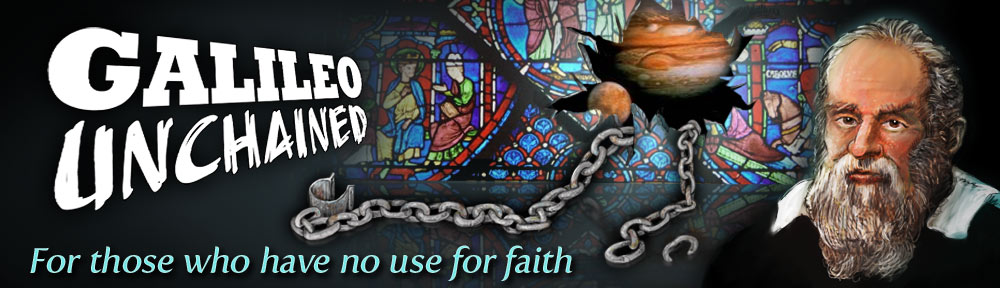
The New Testament is brimming with demands that the Christian care for the poor and needy.  Think of the parable of the Sheep and the Goats (Matt. 25:31–46), the parable of the Good Samaritan (Luke 10:25–37), or the story of Jesus and the rich young man (Luke 18:18–30).

How some politicians and religious leaders can juggle the hypocrisy is beyond me.  I’ll grant that the Bible can be picked apart and made to say just about anything, but isn’t charity a prime demand?

[Jesus said:] Go, sell everything you have and give to the poor, and you will have treasure in heaven. Then come, follow me. (Mark 10:21)

[John the Baptist said:] Anyone who has two coats should share with the one who has none, and anyone who has food should do the same. (Luke 3:11)

If anyone has material possessions and sees a brother or sister in need but has no pity on them, how can the love of God be in that person? Dear children, let us not love with words or speech but with actions and in truth. (1 John 3:17–18)

Religion that God our Father accepts as pure and faultless is this: to look after orphans and widows in their distress and to keep oneself from being polluted by the world. (James 1:27)

The Religious Foundation of Groundhog Day

Does God exist?  It's an important question.We’re all familiar with the major astronomical milestones in the year—the summer and winter solstices, when our hemisphere is tipped maximally toward or away from the sun, and the spring and fall equinoxes, when each day worldwide has roughly 12 hours of sunlight and 12 of darkness.  These dates separate the seasons—the spring equinox marks the beginning of spring, and so on.  They are to the calendar what north, south, east, and west are to the compass.

In the same way that the distance between the four cardinal compass points are divided by four ordinal points (northeast, southeast, and so on), the seasons defined by the four astronomical dates are divided by four cross-quarter days.  These were Gaelic festivals in medieval times.  They are Imbolc (February 2), Beltane (May 1), Lughnasadh (August 1), and Samhain (October 31).  Imbolc lines up with our Groundhog Day.

Most of us are familiar with the idea that on Halloween (All Hallows’ Eve, or Gaelic Samhain), spirits from the next world could enter ours, which is why ghosts and the dead are associated with Halloween.  In Gaelic mythology, the veil between our world and the next became thinner not only on Samhain but for each of the cross-quarter days.  These days provided opportunities for divining the future using information from beyond.

In the same way that Christmas subsumed pagan holidays on the winter solstice like Saturnalia and Yule, the Christian holiday of Candlemas subsumed Imbolc (February 2).  The Celtic goddess Brigit was associated with Imbolc, but she too was subsumed into Christianity as Saint Brigit.

Both pagans and the Christians who followed them observed nature on Imbolc/Candlemas to glean clues to how much longer winter would last.  Would it go the full six-and-a-half weeks until the spring equinox or would it be more gentle winter?

German immigrants to America had used hedgehogs to help predict the weather.  If it was sunny and the hedgehog could see its shadow, winter would go the distance.  But if it was cloudy, winter would be shorter.  With no hedgehogs in America, they switched to groundhogs.  (The two animals are not closely related, but their habitats are similar.)

This Imbolc, whether you follow Punxsutawney Phil (the center of the biggest Groundhog Day celebration in Punxsutawney, Pennsylvania) or some lesser-known groundhog prognosticator, keep in mind the spiritual origins of the tradition.

Photo credit: wvholst

Related links: